Arnav Patil — AI and machine learning engineer in Bengaluru
Currently at Kazam
I’m interning at Kazam in Bengaluru, where I’ve been working since March 2026. I built an AI assistant that helps the support team investigate EV charging incidents.
I was the sole engineer on the project. The assistant is now in production and being used by the team.
The work
The interesting part was turning a question about a charging incident into a useful investigation: following the relevant records, checking what happened, and giving the engineer an explanation they can inspect.
I worked across the application, from the investigation workflow to the software that supports it in production.
The product is proprietary. This page describes my contribution; the application, internal screens, logs, and source code aren’t published here.
Learning by building the model
Pixel GPT explores image generation at a scale where you can still see what’s happening. I trained the models from scratch and built a playground to compare them.
A few pixels, three approaches
Draw half of an 8 × 8 sprite, then compare a bigram model, an MLP, and a small transformer completing the rest. The same input makes their different behaviour easy to see. Temperature and seed controls let you experiment and repeat a result.
From sprites to faces
A separate transformer completes the missing half of a 64 × 64 grayscale face. You can compare the generated result with a mirrored baseline and the original image.
The repository includes the training code, saved evaluation results, and the Streamlit application. These are deliberately small experiments in learning structure, rather than a general-purpose image generator.
From model to working application
I built OncoEdge as an oral-lesion imaging research project, combining a fine-tuned YOLO detector with BioMedCLIP image comparisons. The public demo runs on a CPU and exposes region overlays, relative scores, model disagreement, and structured results.
Working within constraints
The edge-deployment work explores fixed-text embedding caching, a vision-only ONNX export, and TensorRT tooling for a smaller inference path. Jetson latency and final TensorRT engine size remain unverified; the hosted demo demonstrates the CPU implementation.
Making uncertainty visible
The engineering work includes evaluation, image-preprocessing checks, and explicit abstention handling. These details matter when several models are combined and their outputs can disagree.
This is a research demonstration, not a clinical diagnostic tool. The demo and repository document its limitations.
Something you can actually pick up
With Team Gaia at Atria University, I helped design and build a terracotta-based cooling product for Solar Decathlon India.
My work covered brainstorming ideas, designing the product, choosing materials, and making the physical product. It was an opportunity to work through an engineering problem with materials in hand.
We finished runner-up in the Residential Cooling Retrofit division at Solar Decathlon India 2025.
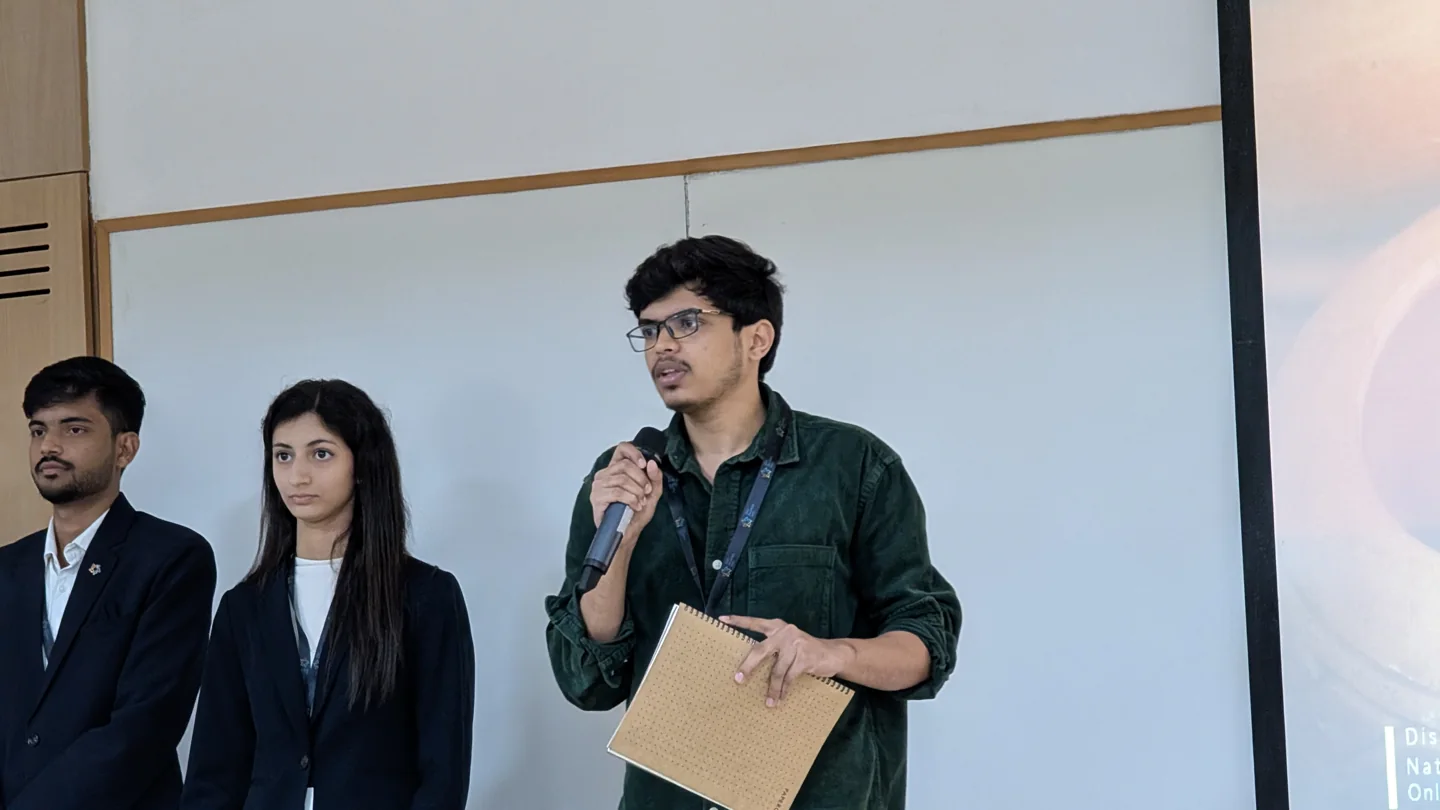
Presenting with Team Gaia at the finals.
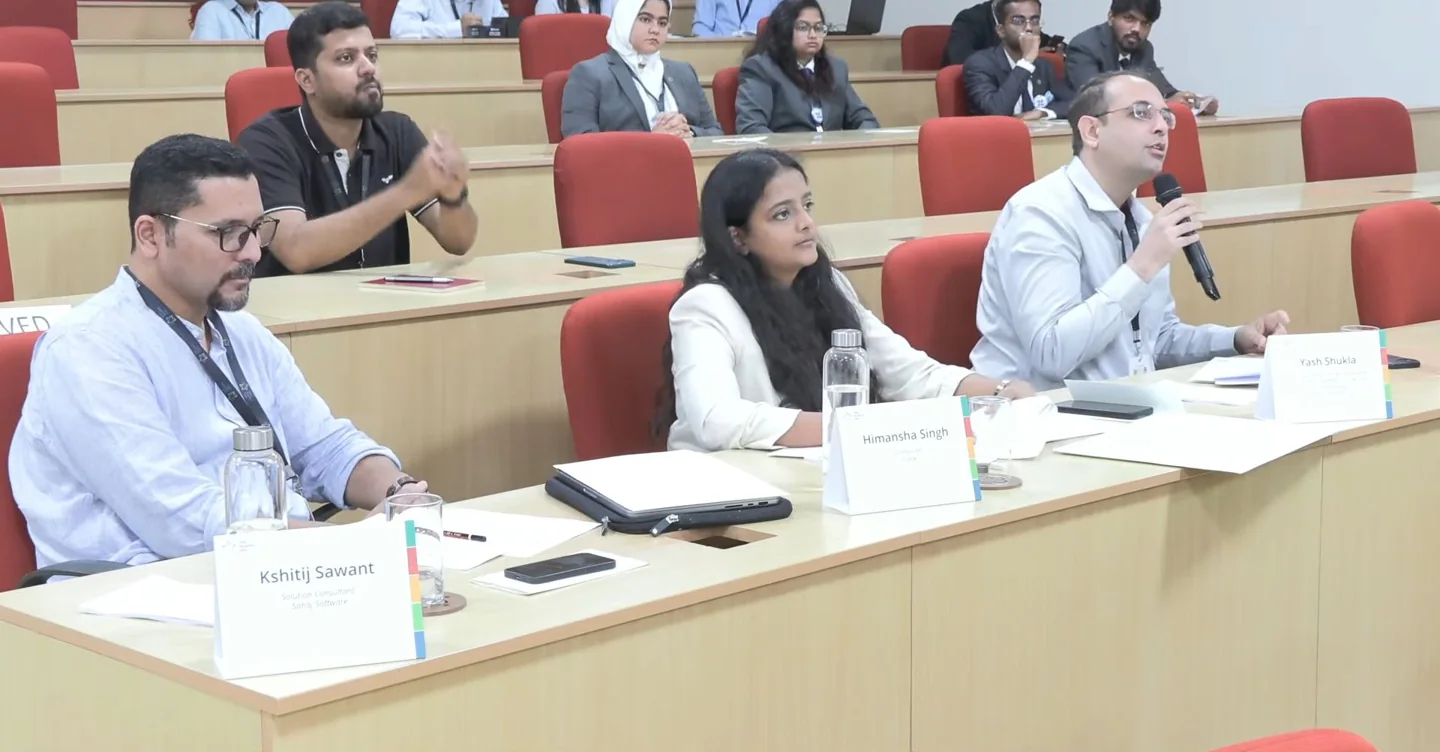
Questions and discussion with the jury.
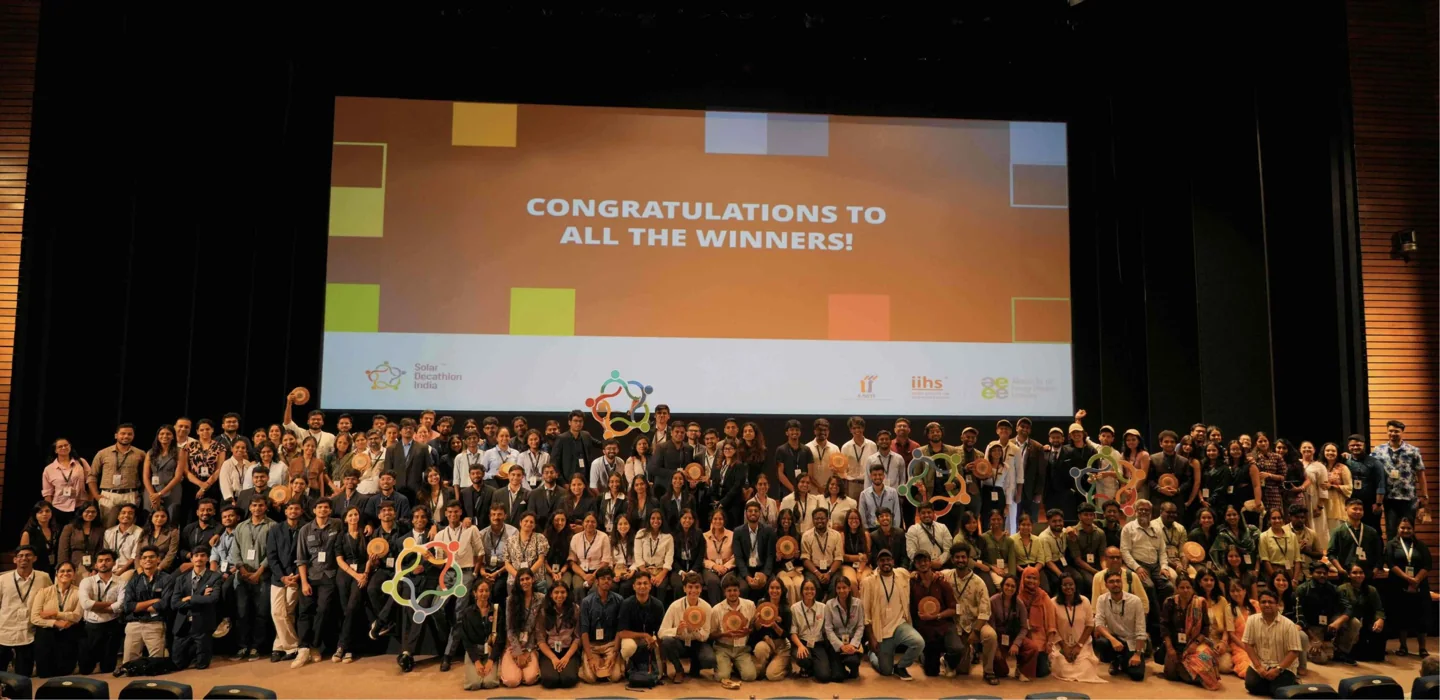
The 2025 finals.